
The Paraguayan War
Causes, Strategies, and Consequences of South America's Largest Conflict
The Paraguayan War
The Paraguayan War, which occurred between 1864 and 1870, represents a significant milestone in the history of South America. This conflict was fought between Paraguay and an alliance formed by Brazil, Argentina, and Uruguay, establishing a backdrop of intense rivalry and territorial disputes in the region. Within the historical context, Paraguay emerged as an autonomous nation under the leadership of Francisco Solano López, who sought to expand his influence and power.
The causes of this war are multifaceted, involving commercial disputes, territorial interests, and political ideals. Paraguay's perception of threat regarding the growing power of Brazil and the Argentine provinces was a key factor that drove belligerence. Similarly, unstable political alliances in the region contributed to an environment ripe for conflict. The role of leaders like López was crucial, as his expansionist ambitions challenged the existing order, leading to an escalation of tensions.
Importantly, the Paraguayan War not only redefined the political map of the continent but also profoundly affected relations among the countries involved. The outcome of the conflict was devastating, leading to a significant loss of life and altering the power dynamics in South America. The war exposed the weaknesses of the region's institutions and armies, prompting reflection on the sovereignty and autonomy of South American states.
Therefore, the Paraguayan War stands out for its historical complexities, which continue to reverberate in the contemporary political and social context of South America. Its repercussions are felt to this day, influencing interactions and policies among South American nations.
Causes of the Paraguayan War
The Paraguayan War, occurring between 1864 and 1870, was a crucial event in South American history, with causes rooted in a complex web of political, economic, and social factors. Political instability in the region, marked by fragmentation and rivalries among neighboring states, intensified the tensions that culminated in the conflict. Paraguay, under the leadership of President Francisco Solano López, aspired to expand its territory and influence in the region.
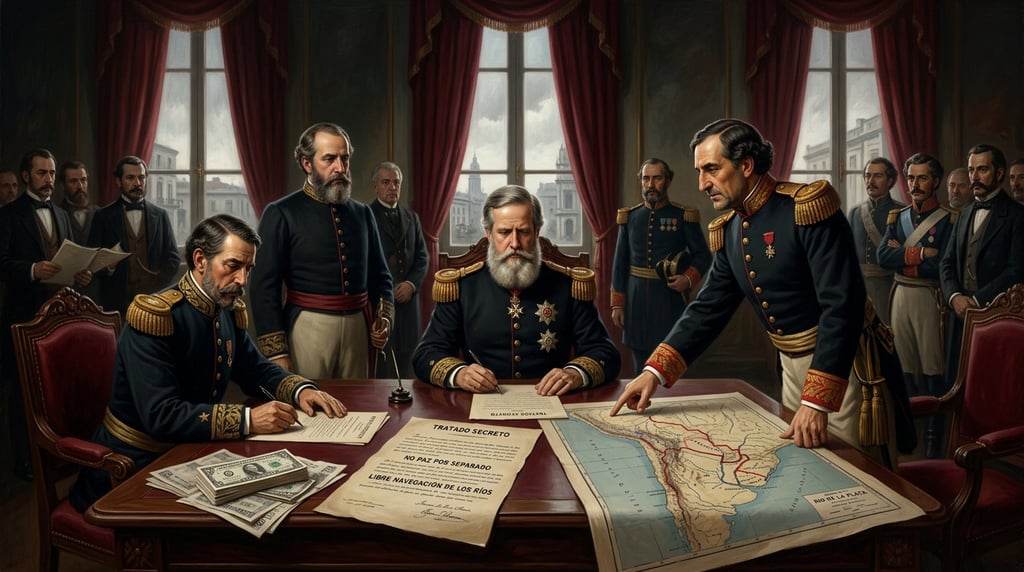
In the political arena, López's ambition and his desire to position his country as a regional power contributed to the outbreak of the war. He sought a self-sufficient and strong Paraguay, in contrast to its neighbors, which frequently faced internal crises. Relations between Paraguay and Brazil, Argentina, and Uruguay were tense, primarily due to the issue of access to the River Plate (Río de la Plata), a vital trade route. Growing distrust and political offensives also fueled the rivalry among these nations.
Beyond political dynamics, economic factors played a significant role in causing the war. Paraguay had a predominantly agrarian economy and, under López's leadership, sought to secure control over trade routes and natural resources. Paraguay's pursuit of increased economic self-sufficiency and expanded borders led to a perception of threat among neighboring countries, which saw their own economic and political influence at risk.
Finally, social issues, including class structure and nationalist sentiment, were also interwoven into the buildup of the conflict. The mobilization of a Paraguayan national identity, combined with internal social pressure for war, made Paraguay an even more determined actor in its quest for power and recognition. Thus, the combination of these factors culminated in Paraguay's declaration of war against Brazil, igniting one of the most devastating conflicts in the history of South America.
Military Strategies Utilized
The Paraguayan War, which took place between 1864 and 1870, revealed a range of military strategies employed by the participating nations: Paraguay, Brazil, Argentina, and Uruguay. Paraguayan President Francisco Solano López led his country with a bold, militaristic approach. He sought to mobilize Paraguay's resources, emphasizing the need for a robust and well-trained army, believing this would guarantee national survival and sovereignty. López implemented a conscription system aimed at increasing the size of the Paraguayan armed forces, turning the civilian population into soldiers. While initially effective, this strategy resulted in high human costs, directly impacting Paraguayan society.
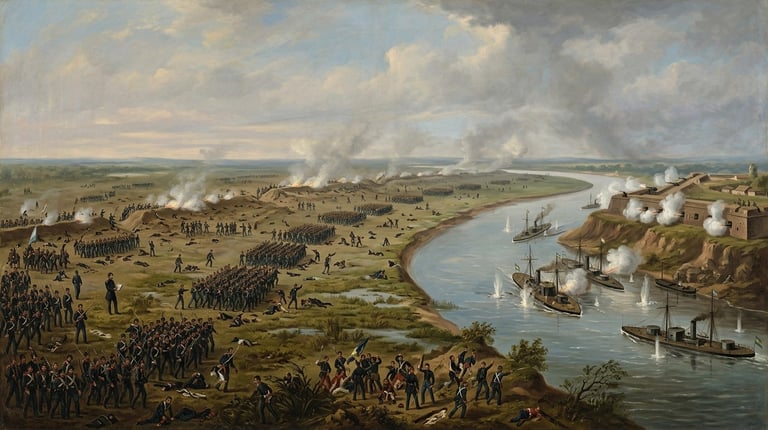
In response to this mobilization, Brazil and Argentina adopted combined warfare tactics. While the Brazilian army prioritized numerical superiority and logistics, backed by a continuous reinforcement of troops and supplies, Argentine forces focused on creating defensive lines and utilizing guerrilla warfare. Alignment between these countries was critical, as it allowed for effective coordination during campaigns. The allied forces also benefited from deploying warships on the Paraná River, which provided a strategic advantage in controlling supply routes.
Another major strategy debated during the conflict was the utilization of fortifications and the defense of strategic positions. Paraguay adopted the construction of trenches and fortifications at key points, such as the capital, Asunción, and defensive works established in the surrounding areas. The fierce resistance in places like the Siege of Humaitá exemplified this defensive tactic, challenging the offensive capabilities of the allied armies. In short, the diverse strategic approaches employed throughout the Paraguayan War shaped not only the course of the conflict but also future interactions among South American countries.
The Role of the Allies
The Paraguayan War, which took place between 1864 and 1870, featured a significant alliance between Brazil, Argentina, and Uruguay. This union played a crucial role in the development of the conflict, as the allied powers organized themselves to face the growing military threat imposed by Paraguay, led by Francisco Solano López. The collaboration among these nations not only reflected their geopolitical interests but also aimed to ensure stability in the South American region.
Brazil, as the largest military power of the trio, was fundamental in mobilizing troops and providing resources. Its extensive military force, combined with a well-defined war strategy, provided a solid foundation for the joint efforts. Brazilian leadership had a significant impact on battlefield maneuvers, especially in attacking Paraguayan cities, which ultimately altered the course of the conflict in favor of the alliance.
On the other hand, Argentina played a strategic role in mobilizing its troops and providing intelligence about Paraguayan territory. The Argentine government understood that the defeat of Paraguay would benefit its own territorial and security interests. This translated into an effective commitment of men and resources, reinforcing the alliance's position in the conflict.
Uruguay, despite having smaller participation, was vital due to its geographical position and its history of rivalry with Paraguay. Uruguayan collaboration helped ensure that the southern flank was protected, allowing Brazilian and Argentine troops to focus on deeper offensives into Paraguayan territory.
The power dynamics among the allies were complex, with each nation seeking to maximize its post-war territorial gains and political influence, which frequently resulted in internal tensions and debates over military command and the division of objectives. In essence, the alliance between Brazil, Argentina, and Uruguay not only shaped the unfolding of the war but also influenced diplomatic relations and power configurations in South America for decades to follow.
Social and Economic Impacts of the War
The Paraguayan War, spanning from 1864 to 1870, had a profound impact on the societies and economies of the countries involved, especially Paraguay. This conflict resulted in unprecedented devastation, leading to the loss of life of approximately 60% of the Paraguayan population, from which the country never fully recovered. The war, therefore, not only altered the country's demographics but also disrupted its social and family structures, creating an imbalance felt across several generations.
The male population, which formed the backbone of the workforce and family structure, was largely decimated. This loss had deep repercussions on reproduction, education, and the careers of many Paraguayan citizens, leading to labor shortages and a shrinking population. Beyond the lives lost, the war destroyed vital infrastructure, including homes, schools, and healthcare institutions, which took years to rebuild.
Regarding the economy, Paraguay, which had previously become an early model of economic development, was brought to ruin. The economic consequences of the war were devastating: lands were ravaged, agricultural production plummeted, and international trade suffered a significant blow. The State was left in a precarious financial situation, and dependence on foreign aid became a necessity. With the Paraguayan economy dismantled, foreign investments declined, and economic recovery became a slow and painful process.
The governments of Argentina and Brazil, though victorious, also faced social and economic consequences, ranging from instability to political movements. Consequently, the social and economic impacts of the Paraguayan War endured, shaping the history of South America in immeasurable ways and altering the prospects for regional development.
Political and Geopolitical Consequences
The Paraguayan War, which occurred between 1864 and 1870, resulted in deep political and geopolitical consequences that significantly shaped the dynamics of South America. In Paraguay, the war left a trail of devastation, with a drastically reduced population and ruined national infrastructure. The leadership of President Francisco Solano López was shattered, leading to a re-evaluation of the Paraguayan political system and subsequent attempts at reconstruction under new governing guidelines.
Furthermore, the war brought to light the fragility of Paraguay, which found itself seeking restructuring and reintegration into international relations after the conflict. The rise of Brazil during the conflict positioned it as a new hegemonic power in the region. Brazil, alongside Argentina and Uruguay, played a crucial role in the political decisions and territorial arrangements that emerged after the war. With the creation of new border lines between neighboring countries and Paraguay, new alliances and rivalries began to develop, which endure to this day.
The war also reconfigured power structures in South America, resulting in a balance of forces that favored Brazil, which managed to expand its borders and increase its political influence over other South American nations. As Brazil consolidated itself as a regional power, Argentina also sought to assert itself with greater force on the political stage, leading to an increase in tensions between the two countries. The political and geopolitical consequences of the Paraguayan War were not limited to the immediate post-war period but heavily influenced the foreign and domestic policies of the involved countries, shaping the future of the region.
Legacy of the Paraguayan War
The Paraguayan War, which occurred between 1864 and 1870, deeply molded the collective memory of the countries involved: Brazil, Argentina, and Paraguay. This conflict not only resulted in devastating consequences, such as the loss of life on alarming scales, but also left an indelible mark on how these nations perceive themselves and relate to one another on the international stage. The enduring legacy of this conflict continues to influence political, social, and cultural discussions to this day.
In terms of national identity, the Paraguayan War is frequently evoked as a point of unity or division, depending on the perspective adopted. For Paraguay, the war is remembered as a period of near-annihilation, with its population drastically reduced and its economy stagnant. This historical trauma still echoes in national narratives, contributing to a sense of resilience and a struggle for self-determination. On the other hand, Brazil and Argentina, which emerged from the war in relatively stronger positions, utilize these memories as symbols of achievement and triumph, even as they simultaneously face dilemmas regarding the humanitarian impact of the conflict.
Additionally, the Paraguayan War shaped bilateral relations in South America. The rivalry that arose between Brazil and Argentina, exacerbated by their shared military experience, generated tensions that echo through the cooperation agreements and disagreements that mark contemporary politics in the region. The consequences of the war also prompted a re-evaluation of alliances, reflecting in the creation of economic blocs and the strengthening of regional organizations that seek to mitigate conflicts and promote integration.
Thus, the legacy of the Paraguayan War is multifaceted, with implications that go far beyond historical memory, exerting a continuous influence on the formation of national identity and on the dynamics of relationships among the countries of South America.
📚 Continue Exploring Key Points in History:
contato@pontoschavedahistoria.com.br
© 2026. All rights reserved.