

The Palmares War
The True Story of Zumbi and the Resistance of the Quilombo
The Palmares War
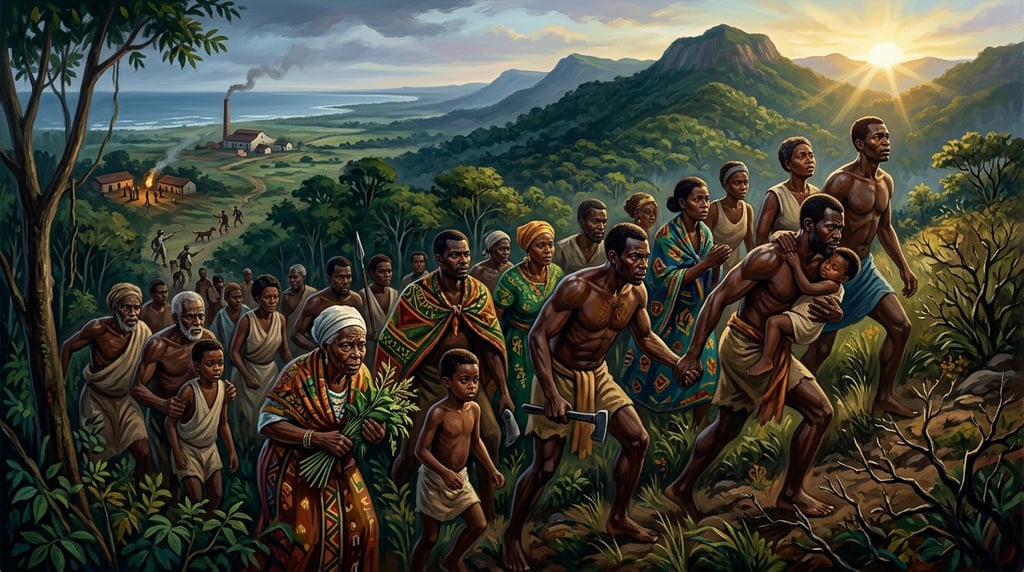
The Palmares War, which occurred between the 17th and 18th centuries, is one of the most significant milestones in the struggle against slavery in Brazil. To understand this resistance, it is fundamental to explore the origin of the quilombos (maroon settlements), of which the Quilombo dos Palmares is the most emblematic. The quilombos emerged as a response to the brutality of slavery, representing havens of resistance and freedom for enslaved Africans who managed to escape from plantations and chains.
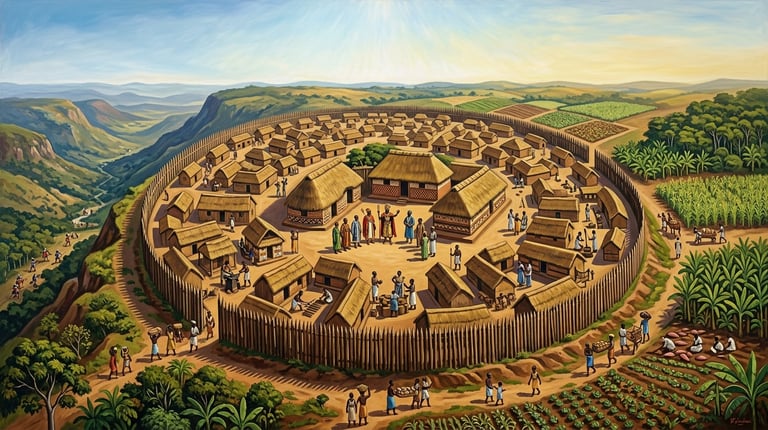
The Quilombo dos Palmares, located in the present-day region of Alagoas, became a symbol of the fight for liberty. This space not only sheltered fugitives but also developed an autonomous society where agriculture, culture, and community life were practiced. The importance of the Quilombo dos Palmares transcends its geographical borders; it represented an ideal of freedom that inspired other resistance movements throughout Brazil. Over the years, the quilombolas (quilombo inhabitants) organized themselves to face colonial incursions, establishing themselves as an effective resistance against oppression.
Within the historical context, the 17th and 18th centuries were marked by a growing demand for labor on sugar plantations and, later, on coffee plantations, which intensified the trafficking of African people to Brazil. This social and political landscape, riddled with tensions, fueled the need for rebellion and the pursuit of freedom. The role of Zumbi dos Palmares, one of the most prominent figures of the resistance, stands out in this context, symbolizing both individual and collective struggle. The Palmares War, therefore, is not just a history of clashes, but a narrative of courage and perseverance that remains a benchmark in the fight for human rights and freedom.
Zumbi dos Palmares: The Central Figure of the Resistance
Zumbi dos Palmares is widely recognized as a central figure in the resistance against colonial slavery in Brazil, symbolizing the Afro-Brazilian struggle for freedom. Born in 1655 in a region near what is now the state of Alagoas, Zumbi was raised in an environment marked by oppression and the struggle for survival. His childhood was shadowed by the constant threat of capture by colonial agents seeking to re-enslave the quilombolas. These early challenges shaped his determination and empathy for the collective struggle, laying the foundation for his role as a leader.
During his youth, Zumbi distinguished himself not only through his skill in warfare but also through the steadfastness of his ideologies. He fought for self-determination and for the construction of a free and egalitarian society within the Quilombo dos Palmares, which became a symbol of Afro-Brazilian resistance and autonomy. Zumbi's leadership was characterized by his strategic skills, allowing the quilombolas to defend their freedom against frequent attacks by colonial forces.
In addition to being a military leader, Zumbi was also a political thinker. He advocated for unity among all African nations on American soil, envisioning a future where Afro-Brazilians could live with dignity and respect. His contributions to quilombola culture remain influential, including the religious, artistic, and social practices that developed within a context of resistance and cultural identity. Zumbi dos Palmares, therefore, did not only fight against colonization, but also for the construction of a legacy that celebrated Afro-Brazilian history and culture. Thus, his name is revered as a symbol of resistance, liberation, and the fight against injustice—still reverberating in contemporary struggles for equal rights.
The Social and Political Structure of the Quilombo dos Palmares
The Quilombo dos Palmares, one of the most significant focal points of resistance against colonial and slave-owning oppression in Brazil, featured a complex social and political structure that favored autonomy and solidarity among its inhabitants. Formed primarily by formerly enslaved individuals who fled the plantations, the quilombo became a refuge for diverse groups, including Africans of different ethnicities and indigenous communities.
The internal organization of the Quilombo dos Palmares was characterized by a leadership system based on councils, featuring prominent figures such as Zumbi, who stood out in his role as a military and political leader. Power within the quilombo was distributed in a manner that allowed active participation of its inhabitants in collective decisions, promoting a culture of shared responsibility. This organizational structure not only strengthened the members' resistance but also guaranteed a sense of belonging and identity to those involved, as they operated within a context marked by discrimination and structural violence.
The values that permeated life in the quilombo emphasized freedom, equality, and cooperation. The inhabitants of the Quilombo dos Palmares adopted a lifestyle that integrated African and indigenous traditions, demonstrating a cultural syncretism that enriched their daily practices. The quilombo's economy was sustained by a combination of agricultural and extractive activities, which guaranteed the community's self-sufficiency alongside commercial trade with other locations. Food production and the gathering of natural resources provided not only survival but also a basis for establishing relationships with local tribes and external allies.
These interactions with indigenous and African groups led to the strengthening of social bonds, allowing the Quilombo dos Palmares to become a symbol of resistance, interdependence, and cultural innovation, offering an alternative societal model to the slavery that prevailed in the colonies.
The War Against the Portuguese: Conflicts and Strategies
The struggle between the inhabitants of the Quilombo dos Palmares and Portuguese forces is a significant milestone in Brazilian history, reflecting the resistance and resilience of a people determined to fight oppression. Starting from the late 16th century, the Quilombo dos Palmares established itself as a refuge for Africans fleeing slavery, and its very existence became a direct threat to Portuguese coloniality. Conflicts arose as the Portuguese attempted to regain control over the region and eliminate pockets of revolt.
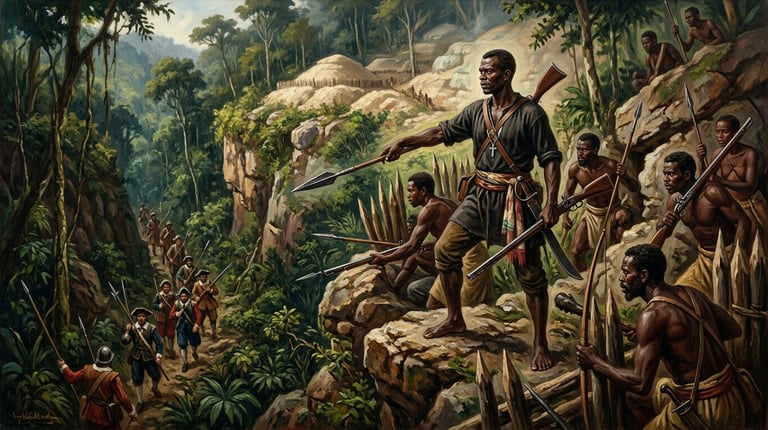
Major confrontations occurred on several occasions, highlighted by the famous battle of 1670, where Zumbi dos Palmares, leader of the quilombolas, demonstrated remarkable command skills. Zumbi implemented guerrilla tactics that included ambushes and rapid attacks, maximizing limited resources and their deep knowledge of the terrain upon which the resistance was based. This type of strategy was essential, given that the Portuguese army frequently outnumbered the quilombo's inhabitants in terms of both men and equipment.
The quilombola forces excelled in mobility and familiarity with the forest, using it to their advantage. The struggle was not limited to direct combat; the communities of Palmares developed strategies to defend their homes and property, avoiding large-scale clashes whenever possible. This approach enabled the survival and continuity of the movement for a considerable period, though it also resulted in severe consequences when confrontations became unavoidable.
The battle to maintain the autonomy of the Quilombo dos Palmares impacted not only the combat forces but also the social and economic configuration of the era, inspiring resistance in other regions of the country. The strategies developed and the lessons learned in this conflict remain important benchmarks in the history of struggles for freedom in Brazil.
The Legacy of Zumbi and the Quilombos in Brazilian History
The legacy of Zumbi dos Palmares is indisputably significant in the history of Brazil. Zumbi stood out not only as a leader of the Quilombo dos Palmares but also as a symbol of resistance against slavery and the fight for freedom. His life and actions continue to inspire social and cultural movements seeking equality and justice within the contemporary Brazilian context. The Quilombo dos Palmares served as a bastion of liberty and an example of social organization among escaped Black individuals, representing an unyielding quest for dignity and autonomy.
The memory of Zumbi dos Palmares is celebrated across various spheres of Brazilian culture. November 20th, the date of his death, is recognized as Black Consciousness Day (Dia da Consciência Negra), celebrating the resistance and contribution of Black populations to Brazilian society. On this day, various activities and demonstrations are held throughout the country, promoting discussions on racism, diversity, and human rights. The figure of Zumbi thus revives the importance of the anti-racist struggle and the defense of civil rights, reinforcing the need for social justice and historical reparation.
Furthermore, the contemporary quilombola movement, which claims territorial rights for the remaining communities of quilombos, has its roots in the resistance led by Zumbi. Today, these movements continue to spearhead the fight for recognition, inclusion, and the preservation of Afro-Brazilian culture. The struggle of the quilombolas is an extension of the legacy left by Zumbi, making it essential for building a fairer and more equitable society. In light of this, it is fundamental to recognize and value the lasting impact that Zumbi and the quilombos had on the formation of Brazilian identity and the pursuit of civil and social rights.
Challenges and Achievements of Quilombolas in the 21st Century
The resistance of the quilombolas, heirs to the struggle of Zumbi dos Palmares, still resonates strongly in the 21st century, even though the challenges faced by these communities are numerous. One of the primary obstacles is the legal recognition of quilombola lands. Despite constitutional guarantees in Brazil, land titling frequently faces severe delays and political resistance, resulting in land conflicts that threaten the cultural and economic survival of these communities.
The quilombolas also fight for the recognition of their human rights, which are often disregarded in the face of pressures from agribusiness and urban development. The lack of effective public policies that address their specific needs contributes to the marginalization and poverty faced by many descendants of these groups. In many cases, quilombola adolescents and youth have limited access to quality education, which perpetuates cycles of inequality and social exclusion.
However, the quilombolas have also achieved notable resistance and successes. In recent years, various communities have turned to social movements and non-governmental organizations to claim their rights and promote cultural valuation. The use of tools like social media networks has been crucial for organization and raising awareness about the issues they face, as well as serving as a means to share their stories of resistance and resilience.
Success stories, such as land titling in certain regions and the promotion of sustainable agricultural practices, are beginning to emerge, reflecting a path of hope for the quilombolas. These advancements are fundamental not only for preserving their cultures but also for guaranteeing their autonomy and dignity in the current landscape. Therefore, the legacy of Zumbi dos Palmares continues to inspire actions in favor of social justice and equal rights.
The Relevance of Zumbi's Resistance Today
The history of Zumbi dos Palmares and the Palmares War are significant milestones in the construction of Afro-Brazilian identity and the fight against oppression. Today, the relevance of this resistance is more necessary than ever, reflecting the challenges society faces in its search for equality and social justice. Zumbi's trajectory is a powerful reminder of the struggles for rights, dignity, and autonomy that continue to echo through the voices of many across Brazil.
The fight against racism, social inequality, and the marginalization of Afro-Brazilian groups remains a perennial reality. The legacy left by Zumbi, which symbolizes resistance against slavery and the pursuit of freedom, serves as a source of inspiration for new generations campaigning for justice. Zumbi's resistance is not confined to a historical period; it is an attribute that applies directly to contemporary struggles. This connection between past and present reinforces the importance of recognizing and honoring those who came before us.
Furthermore, the history of Zumbi and the resistance of the Quilombo dos Palmares bring to the forefront questions regarding the valuation of Afro-Brazilian culture and the need to preserve it within social narratives. In an increasingly globalized world, the appreciation and promotion of cultural diversity are essential for peaceful coexistence among different peoples. The struggle for autonomy, which was central to Zumbi's resistance, continues to resonate and inspires new movements aimed at securing space and a voice for marginalized communities.
contato@pontoschavedahistoria.com.br
© 2026. All rights reserved.