

The Truth About 1500 in Brazil
What Was Brazil Like Before the Arrival of the Portuguese?
Pre-Colonial Brazil
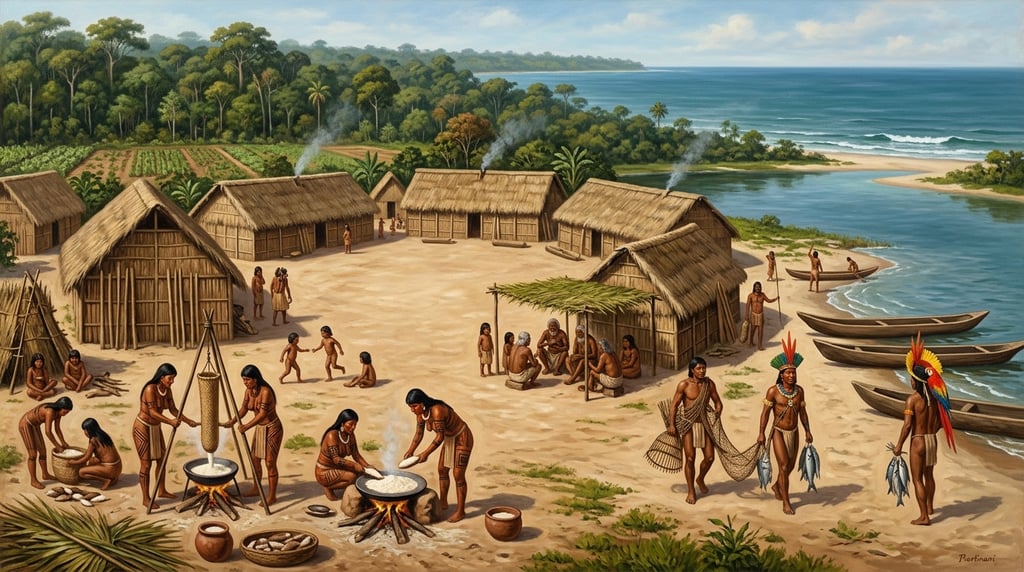
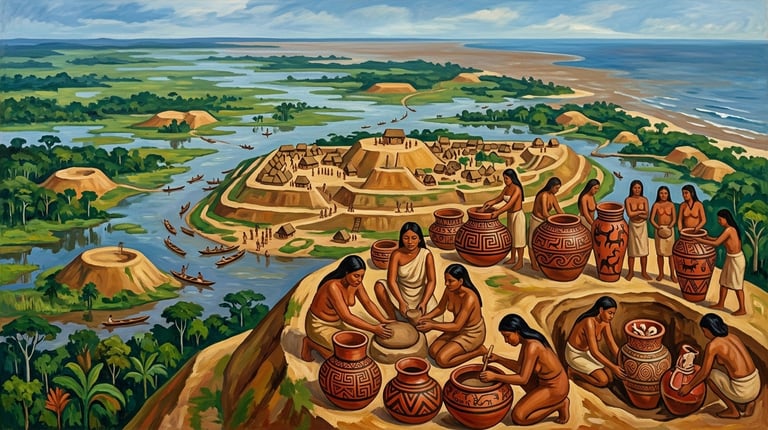
Before the arrival of Europeans, Brazil was a vast territory inhabited by a rich diversity of Indigenous peoples. These groups formed complex societies, each with their own languages, traditions, and ways of life. It is estimated that more than a thousand ethnic groups occupied the territory, each contributing uniquely to the cultural tapestry of pre-colonial Brazil.
The main ethnolinguistic groups included the Tupis, Guaranis, Jês, and Arawaks, among others. The Tupis, for example, were widely distributed along the Brazilian coast and were known for their agricultural skills, cultivating cassava, corn, and other plants. The Guaranis, who mainly inhabited the southern region and areas of Mato Grosso do Sul, were recognized for their hunting and fishing practices, as well as their trade with other groups.
The social organization of these peoples was diverse, with some tribes having more egalitarian structures and others displaying more hierarchical systems. Many communities were organized into villages, where daily life was guided by collective activities, spiritual rituals, and a deep respect for nature. The concept of land, for example, was intrinsically connected to the cultural and spiritual identity of each group. Subsistence practices varied according to environmental conditions, reflecting the adaptability and profound knowledge these communities had of their surroundings.
Therefore, it is essential to recognize the rich history and cultural diversity present in Brazil before the arrival of the Portuguese. This understanding contributes to a more accurate analysis of how European colonization profoundly impacted Indigenous ways of life and the social structure of contemporary Brazil.
Ethnic Diversity of Indigenous Peoples
Before the arrival of the Portuguese in 1500, Brazil was a vast and diverse territory inhabited by multiple Indigenous groups, each with its own culture, language, and way of life. Among the various Indigenous peoples, the Tupi, Guarani, and Tikuna societies stand out, each presenting unique characteristics adapted to their environments.
The Tupi, for example, were known for their agricultural and fishing skills. Their territory extended along the Brazilian coastline, and their diet included cassava, corn, and various native fruits. The Tupi language became one of the main forms of communication between colonizers and Indigenous peoples, containing rich expressions that reflected the diversity of the local fauna and flora.
The Guarani, in turn, occupied a vast area covering regions of Brazil, Paraguay, and Argentina. Their complex mythologies and religious beliefs were centered on a harmonious relationship between human beings and nature. Their diet was rich in hunting, fishing, and agriculture, and they cultivated foods such as sweet potatoes and beans, adapting to soil and climate conditions. The Guarani language remains one of the most widely spoken Indigenous languages in Brazil today, demonstrating their cultural resilience and importance.
The Tikuna, inhabitants of the Upper Solimões region, are another example of Indigenous diversity. This people are known for their unique traditions, including pottery craftsmanship and ritual music. Their language is one of more than 180 Indigenous languages still spoken in Brazil, showcasing the country's rich linguistic heritage. The Tikuna's eating habits reflect Amazonian biodiversity, making them highly skilled in identifying plants and fish essential for their survival.
These examples reveal that the ethnic diversity of Indigenous peoples in Brazil is vast and multifaceted, providing a strong foundation for the development of the cultures that coexist in the country today.
Indigenous Economy and Sustainability
The economy of Indigenous communities that inhabited Brazil before the arrival of the Portuguese was based on deep environmental knowledge and the sustainable use of natural resources. These societies practiced various activities, such as hunting, fishing, agriculture, and gathering, which were essential for their survival.
Hunting, for example, was carried out strategically, respecting the natural cycles of animal species. Indigenous peoples understood the importance of conservation, avoiding the overexploitation of wildlife. This not only ensured resource availability but also maintained ecological balance within their environment. Hunting traps and techniques were chosen based on effectiveness while causing minimal impact on local ecosystems, allowing animal populations to recover over time.
In fishing, Indigenous peoples applied techniques that limited overuse of fish populations and contributed to the preservation of aquatic species. Practices such as using locally made nets and capture methods that did not destroy aquatic environments were common. The gathering of fruits, roots, and other products from native plants also reflected a respectful relationship with nature. Indigenous peoples understood when and how to harvest so that plants could regenerate and continue providing resources, maintaining essential biodiversity.
Indigenous agriculture was characterized by planting systems that promoted crop rotation. These systems were not only a strategy to improve harvests but also ensured soil health and agricultural diversity. By cultivating different species, Indigenous communities guaranteed food security while preserving the soil and maintaining a healthy environment for future generations.
Therefore, Indigenous economies were not merely focused on resource extraction, but on practicing an intrinsic form of sustainability, establishing a way of life based on respect and care for the land and its resources.
Social Organization and Power Structures
The social organization of Indigenous societies in Brazil before colonization was complex and varied, consisting of different groups with their own languages, cultures, and systems of power. These societies were mainly organized into clans and tribes, each with distinct forms of government and leadership. Power was not centralized and was often held by local leaders known as chiefs.
The chiefs played fundamental roles in mediating conflicts and making important decisions for the community. Leadership was often based on qualities such as wisdom, experience, and military skills, reflecting a system based more on ability than inheritance. Decisions were frequently made through assemblies, where members of the tribe participated, emphasizing a form of collective decision-making.
The relationship between culture and religion was also central to social life. Spiritual practices and beliefs were often connected to nature and everyday activities, with rituals that promoted social unity and reinforced moral and ethical values. Each Indigenous group had its own deities and myths that shaped their worldview and social norms. Ceremonies and celebrations not only marked important life cycles but also strengthened alliances and relationships between different communities.
In summary, the diversity and richness of Indigenous social organizations in pre-colonial Brazil reveal a level of complexity that is often underestimated. These aspects were essential for understanding the social and political dynamics of the societies that inhabited Brazilian territory before European arrival.
Intertribal Relations and Trade
Before the arrival of the Portuguese in 1500, Brazil was inhabited by numerous Indigenous tribes that maintained complex and dynamic relationships with one another. These interactions ranged from conflicts to alliances and were essential in shaping a rich and diverse social fabric. Beyond social relationships, tribes also established trade systems that were fundamental for survival and cultural development.
Trade between tribes was essential for obtaining resources unavailable in their immediate territories. Coastal tribes, for example, often exchanged fish, shells, and salt with inland groups, who provided goods such as wood, medicinal plants, and pottery. These commercial practices not only ensured survival but also promoted the exchange of knowledge, traditions, and technological innovations.
Trade routes were established according to geography and seasonal cycles. Indigenous peoples possessed deep knowledge of their environments and used this understanding to maximize the success of their exchanges. Trading could occur through informal markets or during social gatherings that brought different tribes together, strengthening friendships and alliances.
It is important to highlight that intertribal relations and trade systems were not merely economic activities; they were deeply connected to spirituality and cultural traditions. Trade served as a means of cultural expression and preservation of tribal identities, reinforcing the importance of cooperation in often challenging environments.
Impact of the Arrival of Europeans
The arrival of Europeans in 1500 had a profound and multidimensional impact on Indigenous populations in Brazil. The arrival of Portuguese colonizers triggered a series of social, cultural, and economic transformations that shaped the future of the land and its inhabitants.
One of the most devastating consequences was the introduction of diseases unknown to local communities, such as influenza, measles, and smallpox. Without immunity to these new pathogens, Indigenous populations suffered enormous losses. Some tribes were almost completely wiped out, causing a demographic collapse that permanently changed the social balance of native communities.
Beyond diseases, violence committed by colonizers also had devastating effects. European ambitions to exploit Brazil's natural resources led to direct conflicts, where military power often overwhelmed Indigenous resistance. The search for precious metals, agricultural land, and sugar plantations placed intense pressure on native populations, forcing many communities to abandon their ancestral territories.
In response, early missionary efforts attempted to convert Indigenous peoples to Christianity. Although some communities adopted new beliefs and customs, this often occurred through coercion. The introduction of a new religion and culture became another factor that transformed traditional Indigenous life, producing profound changes in social structures and belief systems.
Legacy of Indigenous Peoples in Brazilian Culture
The legacy of Indigenous peoples is an essential component of Brazilian cultural identity. Before the arrival of the Portuguese, countless tribes inhabited the territory, each contributing languages, traditions, and practices that continue to influence contemporary Brazilian culture.
One of the strongest expressions of this legacy can be found in folklore, with myths and legends reflecting Indigenous worldviews. Characters such as the Curupira and Iara demonstrate how nature is central to Indigenous understanding of the world and highlight their deep relationship with the environment.
Indigenous languages have also played a crucial role. Many words in Brazilian Portuguese, especially those related to plants and animals, have Indigenous origins. Terms such as "piranha" and "caiçara" are examples that enrich the national vocabulary. Brazil is also home to more than 200 Indigenous languages, representing a linguistic diversity that must be preserved.
Another significant aspect is Brazilian cuisine, which incorporates Indigenous ingredients and techniques. Foods such as cassava flour and açaí are direct results of Indigenous influence. The use of native herbs and spices also reflects the connection between food traditions and cultural identity.
Indigenous traditions are fundamental to understanding Brazil's cultural diversity. Recognizing and valuing these traditions not only preserves an invaluable cultural heritage but also reinforces the importance of cultural integration in shaping Brazilian identity.
contato@pontoschavedahistoria.com.br
© 2026. All rights reserved.