
The Farroupilha Revolution
Why Rio Grande do Sul Tried to Separate from Brazil

Here is the translation of the provided text into English, formatted for clarity and scannability:
The Farroupilha Revolution
The Farroupilha Revolution, which took place between 1835 and 1845, was one of Brazil's primary separatist movements and had its roots in the social and economic tensions that characterized Rio Grande do Sul at the time. This historical context is fundamental to understanding the motivations that led the gaúcho population to rise up against Brazil's central government. During the early 19th century, Rio Grande do Sul faced a series of difficulties, such as a heavy tax burden, inequality in the distribution of resources, and a lack of adequate political representation on the national stage.
Large landowners, known as estancieiros, and small farmers shared a growing discontent with how the Brazilian central government administered the territory. The centralization of power in the hands of Rio de Janeiro further aggravated the region's economic difficulties, leading many to believe that autonomy would be a viable solution. Moreover, the climate of political instability, with constant changes in government and unfavorable public policies, intensified these tensions.
The living conditions of the population were marked by a severe crisis, where agriculture—the predominant activity in Rio Grande do Sul—found itself limited by a lack of government incentives. Widespread dissatisfaction was not restricted solely to rural magnates; it permeated all social classes within the province. This environment of discontent was the spark for the outbreak of the Farroupilha Revolution, which presented itself as a struggle for autonomy and the pursuit of better living conditions for the region's inhabitants.
Causes of the Revolution
The Farroupilha Revolution, occurring between 1835 and 1845, is an important milestone in the history of Brazil, particularly in the state of Rio Grande do Sul. The causes that motivated this revolt are complex and multifaceted, involving political, economic, and cultural aspects. One of the main factors was the dissatisfaction of the gaúchos with the centralization of power in the hands of the imperial government, which frequently ignored the demands and needs of the southern region.
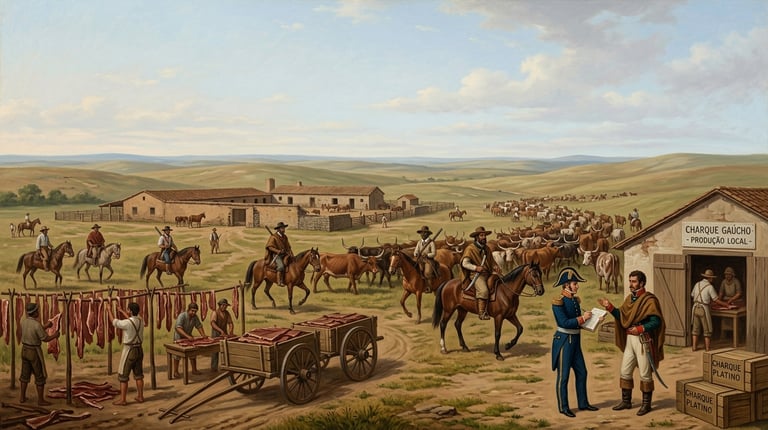
On the economic front, the region was predominantly agrarian, with a heavy reliance on cattle ranching. However, the Empire's fiscal policies, which included high taxes on local production and trade restrictions, harmed the interests of the gaúcho landowners. This situation led to the perception that the imperial government was not only failing to promote regional development but was also directly benefiting other regions, further exacerbating tensions.
Beyond political and economic issues, there was also a strong cultural component at play. The gaúchos, with their unique traditions and lifestyle, felt marginalized and disrespected by the federal government, which often treated regional particularities with contempt. This feeling of cultural devaluation contributed to the formation of a resilient identity and forged a desire for autonomy.
The widespread dissatisfaction in Rio Grande do Sul was fueled by the belief that the struggle for freedom and autonomy was not just a political matter, but also an effort to preserve the culture and interests of the gaúcho population. Thus, the Farroupilha Revolution emerged as an expression of this collective struggle, reflecting the search for recognition, respect, and a more equitable place within the Brazilian context.
The Leaders of the Revolution
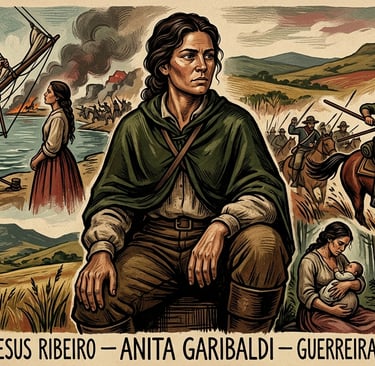
The Farroupilha Revolution, one of the most significant separatist movements in Brazil, was led by a series of charismatic leaders and well-defined strategies that played crucial roles in the struggle for Rio Grande do Sul's autonomy. Among these leaders, Bento Gonçalves stands out and is frequently considered the primary commander of the revolution. Gonçalves, a military officer and politician of rural origin, had a substantial impact on the movement through his leadership and courage. He not only organized the Farroupilha forces but also articulated the demands and aspirations of the Rio Grande do Sul population, seeking greater economic freedom and political autonomy.
Another central figure in the Farroupilha Revolution was Giuseppe Garibaldi, a prominent Italian revolutionary who joined the movement and brought with him his ideals of liberty and equality. Garibaldi, who contributed significantly with his military skills, was vital to several campaigns and battles, reinforcing support for the separatist movement and attracting new combatists. His presence also had an international effect, as he is known for his struggle for freedom across various countries, which stimulated the involvement of other libertarian movements around the world.
In addition to Gonçalves and Garibaldi, other leaders such as Colonel Joaquim Gomes and General João Manuel de Lima e Silva exerted important influence over strategic and tactical decisions throughout the revolution. The diversity of specialties and backgrounds among these leaders lent an interesting dynamic to the movement, allowing the Farroupilha Army to become a significant force in the fight against the Brazilian imperial government. The collaboration and tensions among these leaders not only shaped the Farroupilha Revolution but also left a legacy that is studied and revered to this day.
Major Conflicts and Battles
The Farroupilha Revolution, which erupted in 1835 in Rio Grande do Sul, was marked by a series of significant conflicts and battles, reflecting the gaúchos' struggle for greater autonomy and against practices they considered unfair on the part of Brazil's central government. Among the main battles, the Battle of Porongos, the Combat of São Gabriel, and the Battle of Seival stand out.
The Battle of Porongos, which took place in 1836, was one of the most decisive clashes of the revolution. The farrapos, led by Bento Gonçalves, surprised the imperial troops with a bold strategy involving sieges and ambushes. The result of this battle was a significant victory for the rebels, temporarily consolidating their dominance in the region and enabling the establishment of the Riograndense Republic.
Another fundamental battle was the Combat of São Gabriel, fought in 1837. Farroupilha forces faced imperial troops in a context where control over supply routes proved crucial. Although the farrapos resisted bravely, the numerical and logistical superiority of the imperial army resulted in a defeat, severely impacting the morale of the rebels.
Additionally, the Battle of Seival, held in 1837, played an emblematic role in the revolution. On this occasion, Farroupilha forces triumphed once again, demonstrating a strategic adaptation to their adversaries' tactics. The victory at Seival reaffirmed the military capability of the farrapos and expanded their support among the local population, solidifying the Farroupilha leadership's commitment to the autonomy of Rio Grande do Sul.
The battles of the Farroupilha Revolution not only symbolized the military struggle but also reflected the complexity of the social and political relationships of the era. The accumulated victories and defeats shaped the destiny of the movement and decisively impacted federal relations in Brazil during the period. The outcomes of these confrontations were therefore highly influential in the history of Rio Grande do Sul and in the construction of a distinct regional identity.
Ideals and Proposals of the Farrapos
The ideals and proposals of the Farrapos, which emerged during the Farroupilha Revolution, were fundamental to understanding the motivation behind the separatist movement in Rio Grande do Sul. In the expectation of establishing an autonomous government, the revolutionaries championed not only political independence but also a series of social reforms to improve the living conditions of the local population.
First and foremost, the Farrapos sought administrative autonomy, which would mean more control over local matters and the ability to direct resources for the benefit of their own population. This proposal for self-governance was intertwined with the desire to reduce the influence of the Brazilian central government, which was seen as distant and indifferent to the needs of the gaúchos. Many leaders of the movement believed that the imposition of federal policies harmed the province's economy and did not reflect the interests of the region's inhabitants.
Beyond political autonomy, the Farrapos also aimed for significant social reforms. Among the desired changes was economic freedom, which included the promotion of a fairer economy, ensuring that the region's farmers and merchants had better conditions to prosper. Another crucial point was the abolition of slavery, a controversial topic at the time. The revolutionaries understood that the freedom of enslaved people would not only be an act of social justice but could also contribute to a fairer and more prosperous society.
Thus, the proposals of the Farrapos reflected both a longing for self-administration and a progressive vision regarding social issues. These ideals, which sought to balance freedom and equality, were one of the driving forces of the Farroupilha Revolution, fueling the desire for a more independent and just Rio Grande do Sul.
The Conclusion of the Conflict
The Farroupilha Revolution, which extended from 1835 to 1845, is a significant milestone in the history of Brazil, especially in the state of Rio Grande do Sul. After a decade of conflicts and political disputes, the outcome of this movement was consolidated with the signing of the Treaty of Poncho Verde on March 1, 1845. This agreement marked the end of hostilities between the farrapos and the imperial government, establishing a new relationship between the involved parties.
The Treaty of Poncho Verde recognized certain demands of the rebels, although it did not result in the independence of Rio Grande do Sul. Instead, the imperial government accepted some of the farrapos' demands, such as exemptions from specific taxes and the granting of greater autonomy to the province. The signing of the treaty represented, in many ways, an attempt at pacification and a pragmatic response to the needs of a state that had been fighting against the economic and administrative disparities affecting it.
However, the implications of the treaty were complex. Despite bringing an official end to the conflict, regional tensions and demands for autonomy remained an important backdrop in Rio Grande do Sul politics. Although the treaty was a partial victory for the farrapos, economic difficulties and dissatisfaction with the central government persisted, shaping the future relationship between the province and the Union. Thus, the consequences of the Farroupilha Revolution reverberated far beyond its immediate end, influencing the political and social dynamics of 19th-century Brazil.
Legacy and Impact of the Revolution
The Farroupilha Revolution, occurring from 1835 to 1845, left a profound legacy on the history of Brazil and on regional identities, especially in Rio Grande do Sul. This movement was not merely an attempt at political separation, but also a reflection of the aspirations for autonomy and social issues that emerged during that era. The struggle of the Farroupilhas emphasized the importance of freedom and the pursuit of a unique identity, contrasting with the national identity that was then being solidified. Consequently, the movement became an important symbol of gaúcho resistance.
The consequences of the Revolution were significant, influencing local populations' perceptions of their own culture and history. Rio Grande do Sul came to be seen as a region with a distinct identity, marked by elements such as its music, gastronomy, and the campeira (countryside/cowboy) tradition. This strengthening of regional culture represented resistance against the centralization of power and the cultural homogenization promoted by the imperial government. Thus, the Farroupilha Revolution contributed to the rise of a gaúcho identity that persists to this day.
In addition to shaping local identity, the Revolution also had a significant impact on subsequent revolts and the evolution of Brazilian federalism. The struggle for greater autonomy and recognition of regional particularities set a precedent for future movements. Revolts like the Revolution of 1924 and the Revolution of 1930 also drew elements from the Farroupilha Revolution, reflecting dissatisfaction with the centralization of power and the quest for representativeness. More broadly, the Farroupilha Revolution fits into the context of the federal tensions that shaped the political configuration of Brazil in the 20th century.
📚 Continue Exploring Key Points in History:


contato@pontoschavedahistoria.com.br
© 2026. All rights reserved.