

The Dutch Invasions of Northeast Brazil
The Day Brazil Almost Spoke Dutch
The Dutch Invasions
The Dutch invasions of Brazil, particularly in the Northeast, represented a critical and intriguing moment in Brazilian colonial history. This phenomenon occurred in the 17th century, when the Dutch West India Company, established by the Republic of the Netherlands, launched a series of military expeditions in search of dominance over the precious sugar plantations that characterized the region's economy. Sugar became a fundamental commodity, influencing not only the local economy but also the geopolitical disputes among European powers.
At the heart of the invasions lay the fierce rivalry between Portugal and its adversaries, especially the Netherlands and England. During this period, Portugal faced significant difficulties, partly due to Spanish rule over its crown, leaving it in a vulnerable position against Dutch attacks. Seeking to expand their trade and consolidate their presence in Latin America, the Dutch identified Brazil as a valuable opportunity, given the economic potential of the sugar mills (engenhos) that predominated in the region.
The historical context, therefore, created a favorable setting for the invasions. The struggle for hegemony in sugar production was not restricted solely to territorial dominance; it also involved strategic alliances with indigenous populations and even the utilization of African slaves—elements that made the battles even more complex. Thus, the Dutch invasions were not mere military incursions, but rather a deliberate attempt to establish a new economic and political order in the region, challenging Portuguese supremacy, which until then had been unquestioned.
These events shaped not only the economic history of Brazil but also its cultural and social formation, leaving a legacy that would be felt for many subsequent generations.
During the 17th century, Brazil experienced a political and economic context influenced by global events and specific regional dynamics. The Declaration of the Treaty of Tordesillas, made in 1494 between Portugal and Spain, had established boundaries for colonial possessions, but over time, this division became a fertile ground for territorial disputes. The United Provinces of the Netherlands, seeking to expand their commercial borders and increase their influence, saw Brazil as an opportunity to destabilize Portuguese dominance and enrich their own economies. This ambition intensified with Dutch independence from Spain in 1581, leading to efforts to secure control and extract resources from South American colonies, especially sugar, which was highly valued in Europe.
In Brazil, social and economic conditions were also in a state of tension. Sugar production was the primary economic activity, and the plantations, already based on slave labor, faced constant difficulties—both in maintaining workers and in competing with the refined products from the British and Dutch West Indies. Furthermore, discontent among sugar mill owners, labor shortages, and growing demands for freedom by enslaved people created an environment prone to conflicts and revolts. This situation was aggravated in Europe, where wars and economic crises influenced transatlantic trade and colonial domination strategies.
Thus, with a Brazil divided and weakened by internal difficulties, a Dutch invasion became a tangible possibility. The military operations initiated by the Dutch West India Company were facilitated by local support and a strategy of rapidly and effectively conquering the centers of sugar production. The combination of Dutch commercial interests and the vulnerable state of the Brazilian economy transformed the 17th century into a decisive period in which the balance of power in the region was poised to shift drastically.
The Major Dutch Invasions
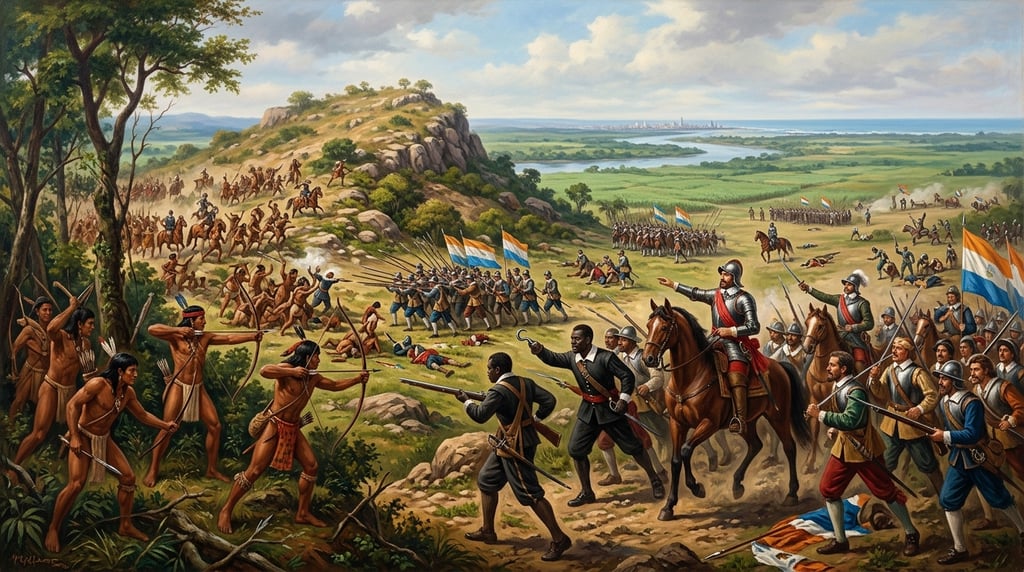
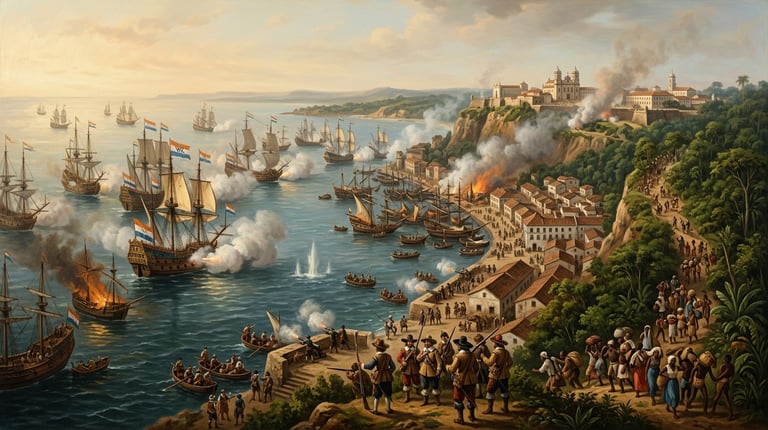
During the 17th century, the Dutch invasions in Brazil, especially in the Northeast, shaped up to be crucial events in colonial history. Motivated by the wealth and economic potential of the region, the Dutch carried out a series of incursions, with the occupation of Pernambuco being the most notable. In 1630, troops from the Dutch West India Company, under the command of military leader Hendrick van der Heijden, landed in Olinda. After intense combat, they conquered the city, establishing a milestone of Dutch rule in the area.
Recife, then a small village, became the administrative center of the Dutch occupation, which lasted for nearly 30 years. The resistance landscape was marked by clashes between Dutch forces and Portuguese colonists, who relied on the support of indigenous populations. The Battle of Guararapes, which occurred in 1648 and 1649, stood out as one of the main moments of Brazilian resistance. This clash symbolized not only the struggle for control over the region but also the union of different ethnic groups against a common enemy. The military tactics used by the Dutch, such as building fortifications and using advanced artillery, were crucial to their initial victories; however, the defenders' adaptation through forming alliances and conducting ambushes began to balance the scale of the battles.
The occupation also brought profound consequences for the local economy by promoting sugar cultivation, which boosted trade and enriched certain local elites. However, this also generated social tensions, as the Dutch encountered resistance from conservative segments of society when trying to implement a liberal and more tolerant administration. Portuguese resistance to these Dutch attempts was thus just as significant as the invasions themselves, reflecting the complexity of colonial relations at the time.
The Dutch Administration and Its Policies
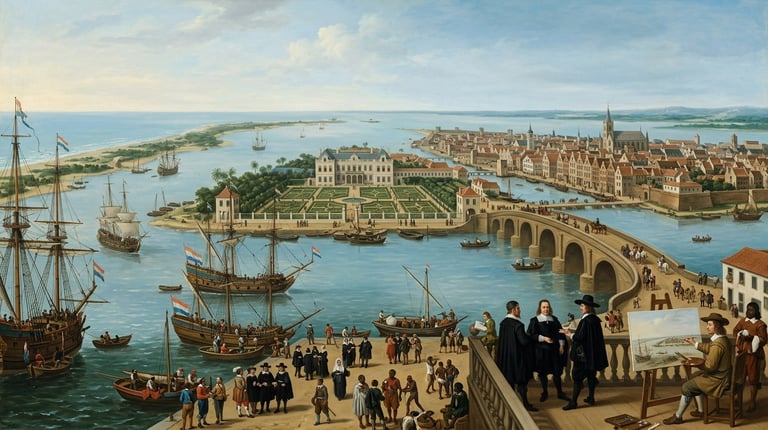
The Dutch administration in Brazil, especially during the government of Johan Maurits of Nassau, was marked by a series of innovative policies aimed at integrating the northeastern territory into the Dutch empire. Maurits, who governed from 1637 to 1644, implemented reforms that targeted not only political control but also the promotion of sustainable economic development and the fostering of cultural coexistence.
One of the primary strategies adopted by Maurits was religious tolerance, allowing diverse faiths to coexist peacefully. This approach contributed to an environment of plurality that was uncommon at the time, especially in a context as polarized as the struggle against Portuguese colonizers. This openness allowed the Dutch to establish advantageous commercial relations with locals and encouraged the immigration of artists, scientists, and merchants, who enriched the cultural and social life of Brazil.
In terms of economic innovations, the Dutch government introduced new agricultural techniques and improved local infrastructure. Sugar plantations, one of the primary export products, were modernized, increasing production and, consequently, profitability. Furthermore, the construction of canals and the organization of trade greatly benefited cities, transforming Recife into a cosmopolitan and strategic hub for international navigation.
In the fields of arts and sciences, incentives provided to the work of artists and naturalists resulted in a rich cultural legacy, evidenced in the works of painters like Frans Post and Albert Eckhout, who immortalized the landscape and riches of Brazil on their canvases. The Dutch administration did not merely seek economic exploitation; it left an indelible mark on Brazilian culture through the exchange and coexistence of different traditions and ideas.
Portuguese Resistance and the End of the Occupation
The Dutch occupation in Northeast Brazil, despite initially being marked by a degree of tolerance and economic development, soon faced growing discontent among the local population. Intensive Portuguese resistance emerged, driven largely by issues of cultural identity, religiosity, and the defense of sovereignty. The Dutch, a minority in a largely Portuguese territory, established a government that, while modern in certain aspects, failed to garner the necessary popular support for its permanence.
One of the main milestones of this resistance was the Pernambucan Insurrection (Insurreição Pernambucana), which began in 1645. This movement was crucial because it mobilized the population against Dutch authorities, reflecting the desire to retake control of the land. The rebels, consisting primarily of local colonists and troops, organized a series of battles that came to define the resistance process. The use of guerrilla tactics and battlefield intelligence by the Portuguese was fundamental in forging a strong sense of unity against the occupation.
The planning and execution of guerrilla strategies, along with the support of pre-existing allies and the military experience of local leaders, were decisive in the fight against the Dutch. Consequently, the resistance continually reinforced itself through the formation of alliances and acts of sabotage that undermined Dutch confidence. Decisive battles, including the Battle of Tabocas and the Battle of Guararapes, symbolized not just physical combat, but a feeling of liberation and the reclamation of the land. The combination of these factors culminated in the expulsion of the Dutch, establishing an important milestone in Brazilian history and demonstrating the strength of Portuguese resistance.
The Consequences of the Dutch Invasions in Brazil
The Dutch invasions in Brazil, which occurred between the 17th and 18th centuries, had a profound and lasting impact on various aspects of Brazilian society. Initially, the presence of the Dutch in the northeastern region, primarily in Pernambuco, brought a series of alterations to the local economy. The introduction of new cultivation methods and incentives for sugar farming helped expand sugar production, leading to sharp growth in exports. However, this change also generated increased control by local elites and an intensification of conflicts between colonists and foreign investors.
Beyond economic issues, the Dutch invasions brought profound social consequences. During their short period of rule, the Dutch attempted to implement a policy of religious tolerance, allowing Jews and Protestants to settle in the colony. This attitude contrasted sharply with the rigidity of the Inquisition prevailing in Portugal, fostering an environment of cultural and religious diversity that influenced the formation of Brazilian identity. The coexistence of different cultures and religious practices contributed to a syncretism that would become a trademark of Brazil.
In cultural terms, the invasions left a heritage that manifests to this day. The art and architecture of the Dutch period, transformed under the influence of artists like Frans Post and Albert Eckhout, incorporated elements of Brazilian nature and daily life, resulting in a unique style. This fusion of cultural influences helped shape the national identity, highlighting the diversity and richness of Brazilian heritage. In the context of relations between Brazil and Europe, the Dutch invasions also opened new trade routes and altered the dynamic of interactions among colonial powers, influencing the course of colonization across Latin America.
The Dutch Legacy in the Brazilian Northeast
The Dutch invasions in the Brazilian Northeast during the 17th century left a legacy that endures to this day. This period, though marked by conflicts and tensions, also brought significant changes to the culture, economy, and architecture of the region. The Dutch presence resulted in the introduction of new cultivation and trading techniques, transforming the economic landscape of the Northeast. The Dutch stimulated the production of sugar, one of Brazil's primary exports, establishing a model that would influence the economic structure until the 19th century.
Beyond economic dimensions, the Dutch legacy is palpable in architecture. Cities like Olinda and Recife still preserve elements of the architectural style from the Dutch colonial period, characterized by eclectic forms that blend European and local influences. The Princesses' Palace (Palácio do Campo das Princesas), for example, is a landmark that witnesses the cultural fusion resulting from this occupation. Dutch traces in architecture and urban planning reveal an important part of the history and identity of northeastern cities.
In the cultural sphere, Dutch influences are reflected in art, cuisine, and various local traditions. Baroque art, in particular, experienced a flourishing during the invasions, with Dutch artists contributing to the development of styles that are celebrated today. Cultural exchange was an aspect that, despite frictions, introduced aesthetic and gastronomic aspects that complement regional traditions.
The invasions, despite being a period of turmoil, offer lessons on cultural exchange and resistance. It is crucial for the Brazilian Northeast to recognize and celebrate its diverse heritage, learning from the past to build a more inclusive future. Therefore, the Dutch legacy is not merely a piece of history, but a vital component of the northeastern cultural identity that deserves to be continually explored and valued.
📚 Continue Exploring Key Points in History:
contato@pontoschavedahistoria.com.br
© 2026. All rights reserved.