
The Paraguayan War
The Largest Armed Conflict in South American History
The Paraguayan War
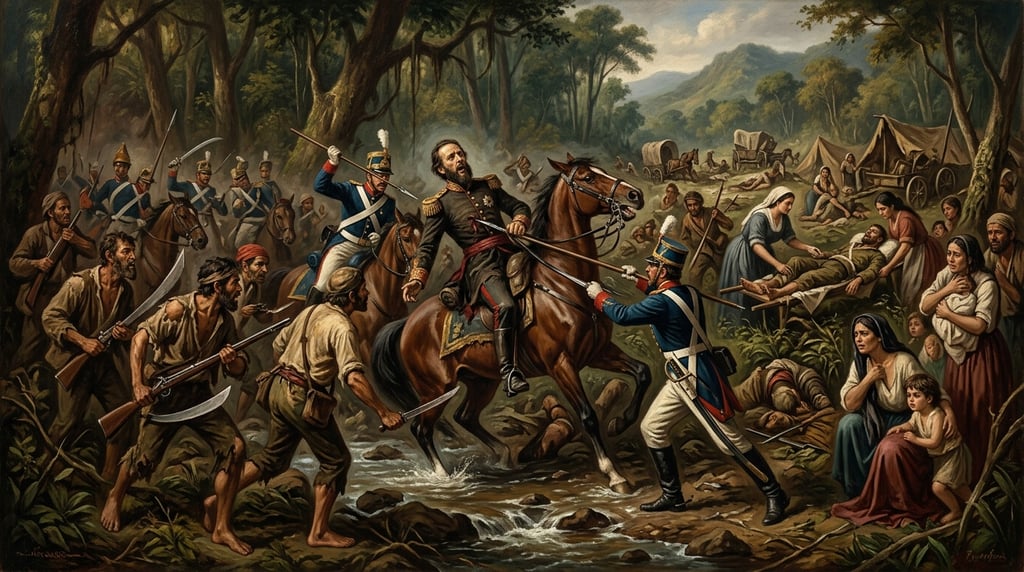
The Paraguayan War, which occurred between 1864 and 1870, was one of the most devastating conflicts in South American history, pitting Paraguay against an alliance of three powers: Brazil, Argentina, and Uruguay. This armed clash not only altered the continent's geopolitics but also triggered profound social, economic, and demographic transformations, especially within Paraguay. To understand the magnitude and repercussions of this conflict, it is essential to explore the historical context and the factors that led to its outbreak.
In the period preceding the war, Paraguay was a relatively isolated and self-sufficient state led by President Francisco Solano López. Tensions began to mount due to various political and economic issues, including Paraguay's desire to expand its territory and regional influence. Rivalry among neighboring nations, particularly with Brazil and Argentina, also played a crucial role in the escalation of hostilities. The landscape was further complicated by internal instabilities in Uruguay, which reflected heavily on international relations across the Río de la Plata basin.
Other determining factors included the pursuit of access to trade routes and the issue of slavery in the region. Brazil, with a development model geared toward modernization, encountered resistance in Paraguay, which opposed certain foreign influences. Furthermore, the ideology of a "United States of the South," which promoted the idea of uniting South American republics into a hegemonic bloc, intensified antagonisms among the countries. Therefore, the Paraguayan War was not merely a military conflict, but a reflection of a broader struggle for power, autonomy, and identity in South America.
The Powers Involved
The Paraguayan War, the largest war in South America, involved four main powers: Paraguay, Brazil, Argentina, and Uruguay. Each of these nations possessed specific interests and motivations that shaped their decisions to enter the conflict.
Paraguay, under the leadership of President Francisco Solano López, sought to expand its territory and secure national autonomy against foreign influences, especially from Brazil and Argentina. Ongoing industrialization and the need to increase regional power made it vital for Paraguay to keep its borders secure and guarantee access to strategic markets and resources.
Brazil, for its part, entered the conflict when it perceived the advancement of Paraguayan interests as a threat to its own security and regional stability. Brazil viewed Paraguayan expansion as a potential challenge to its hegemony in the southern cone of South America, which culminated in a desire to contain Paraguayan growth while simultaneously seeking to strengthen its own geopolitical stance.
Argentina, led by Bartolomé Mitre, had its own territorial ambitions and, much like Brazil, feared the growing influence of Paraguay. Instability in the region and the need to join forces against a common enemy facilitated the formation of alliances that ultimately led to Argentine intervention in the conflict.
Uruguay, though initially a less involved country, was prominent within the political intrigues. Its geographical position and internal struggles made it an important ally and, subsequently, a secondary battlefield during the dispute among neighboring powers. The alliances formed between these countries were fundamental to the unfolding of the conflict, with each nation seeking to satisfy its respective strategic needs and objectives.
The Course of the Conflict
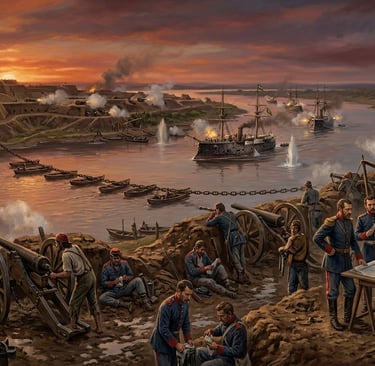
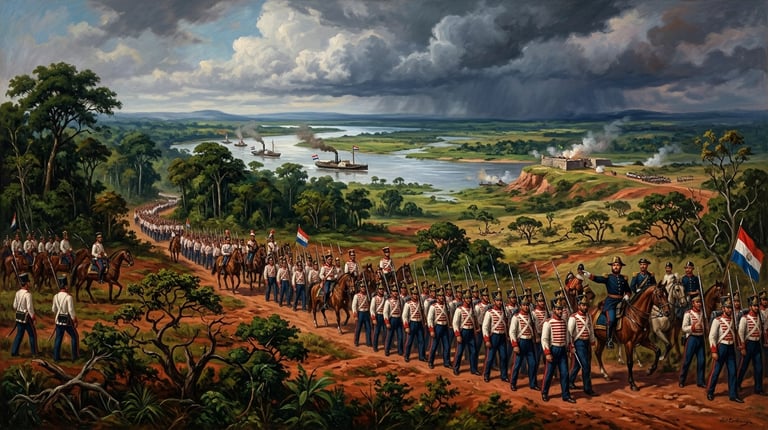
The Paraguayan War, which took place between 1864 and 1870, began amidst a tense climate between Paraguay and its neighbors: Brazil, Argentina, and Uruguay. The discontent of Francisco Solano López, the Paraguayan president, regarding foreign intervention, combined with his desire to expand his territory, served as the primary drivers of hostilities. In 1864, the first military action was the capture of a Brazilian steamboat on the Paraguay River, which became the spark for the war.
Hostilities were marked by a series of significant battles. The first major clash occurred in 1865 in the Itororó region, where the allied forces of Brazil, Argentina, and Uruguay faced the Paraguayan army. López's strategy was based on defense and surprise attacks, utilizing favorable terrain to frustrate enemy advances. Even with the numerical superiority of the allied troops, the Paraguayan army secured several initial victories, causing heavy casualties among the allies.
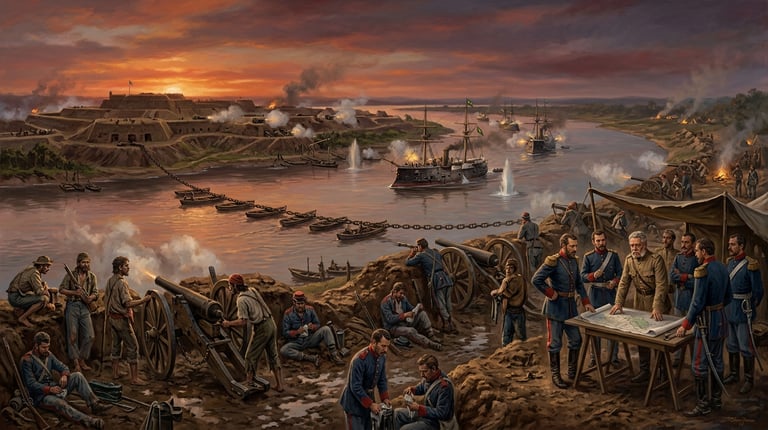
Starting in 1866, the allied forces intensified their campaign, resulting in the Battle of Tuiuti, considered the largest battle in South American history. This engagement highlighted the brutality of the conflict alongside the military tactics employed, such as sieges and direct charges. As the years progressed, Paraguay began to suffer severe losses due to the economic blockade imposed by the allies and a lack of resources. The situation became unsustainable for López, who, despite dwindling forces, continued to fight down to the last drop of his people's blood.
Finally, in 1870, the encirclement of Asunción culminated in the capture of the Paraguayan capital, signaling the end of resistance. The immediate consequences of this conflict were devastating for Paraguay, which lost a massive portion of its population and saw its territory severely reduced. The outcome of the war also significantly altered the balance of power in South America.
Regional Impact and Consequences
The Paraguayan War, which began in 1864 and extended until 1870, caused a profound and lasting impact on the South American region, particularly across the participating countries: Paraguay, Brazil, Argentina, and Uruguay. The consequences were vast and manifested in various ways, spanning social, economic, and political spheres.
In social terms, the war resulted in a massive loss of life. Paraguay, in particular, suffered a catastrophic demographic devastation, with estimates suggesting that up to 90% of the country's male population was decimated. Family and social structures were severely disrupted, leading to a period of instability and a generational void that would impact the nation for decades.
Economically, the conflict had devastating effects on Paraguay, leaving it in ruins. Infrastructure was destroyed, and the country's productive capacity was paralyzed, resulting in a cycle of poverty that lasted for many years. On the other hand, countries like Brazil and Argentina, despite their losses, managed to experience an economic boost driven by wartime contracts and the restructuring of their industries. Brazil saw the rise of a new wave of nationalism and a temporary increase in its economic influence over the region.
In the political arena, the consequences of the war ran deep. The conflict reaffirmed Brazil's position as a regional power, paving the way for the rise of a republican movement and the consolidation of its borders. Furthermore, the war forged a new geopolitical dynamic where smaller powers, like Paraguay, felt the pressure of regional imperialism and the urgent need to position themselves politically to guarantee their sovereignty.
Therefore, the Paraguayan War not only altered the balance of power in South America but also left social and economic legacies that resonate to this day, underscoring the complex interaction between warfare and regional development.
The Lives of Civilians During the War
The Paraguayan War, spanning from 1864 to 1870, did not merely involve the military forces of various South American nations; it also had devastating effects on the region's civilian population. Daily life was drastically upended, leaving profound and long-lasting consequences. Countless families were forced to abandon their homes, resulting in forced displacement that became a shared reality for thousands of Paraguayans and citizens of neighboring countries caught in the conflict.
Within Paraguay, the war triggered an unprecedented humanitarian crisis. Civilians faced severe food shortages, disease, and a lack of shelter. The violence and massacres perpetrated throughout the conflict left indelible scars on Paraguayan society. Cities were bombarded and countrysides ravaged, leaving behind a traumatized and broken civil society. Furthermore, the forced conscription of young boys and men into the Paraguayan army led to an immense loss of life and the collapse of the traditional family structure, amplifying civilian suffering.
In neighboring countries like Brazil, Argentina, and Uruguay, the war also imposed hardships on civilian life. The mobilization of troops, the burden of supplying resources, and growing insecurity created domestic tensions. Communities faced the dilemma of supporting the war effort versus preserving their own livelihoods, resulting in social divisions. The consequences of the conflict extended far beyond the battlefield, deeply affecting the economic and social stability of the involved nations.
In short, civilian life during the Paraguayan War was defined by loss, desolation, and resilience in the face of immense adversity. The devastating impact on non-combatants remains an essential part of the South American historical narrative, reflecting the harsh realities faced by those who were not on the front lines but often suffered the most.
Legacy of the Paraguayan War
The Paraguayan War left a profound legacy in South American history, reflecting its impact not only on the nations directly involved but across the entire continent. Initially, contemporary perceptions of the war were marked by patriotic enthusiasm and heroism, particularly in narratives that exalted national defense. However, over the years, this viewpoint evolved toward a critical analysis that acknowledged the horrors of the conflict and its devastating social and demographic consequences.
The number of casualties, estimated in the hundreds of thousands, and the destruction of infrastructure left a demographic gap that would endure for decades. In culture, the Paraguayan War inspired a series of artistic works—including literature, music, and cinema—that reinterpreted the events in diverse ways. These representations have contributed to the formation of a collective memory that revisits the past, incorporating elements of political communication and local storytelling.
Beyond aesthetic dimensions, this war teaches important lessons regarding armed conflicts and their repercussions on society. A primary takeaway is an understanding of the complexities involved in territorial and power disputes, which are frequently driven by economic and ideological factors but ultimately result in legacies of pain and trauma. The historical memory of the Paraguayan War therefore serves as a warning about the disillusions that arise when countries position themselves as adversaries rather than allies, and how violence can scar future generations.
This legacy continues to be examined in academic and social contexts, reinforcing the vital importance of learning from the past to forge a more peaceful future across South America.
Conclusion and Final Reflections
The Paraguayan War remains one of the most significant episodes in South American history. The war did not only leave a profound impact on the participating nations—Paraguay, Brazil, Argentina, and Uruguay—but also shaped the guidelines of international relations in the region for years to come. When discussing the devastating consequences and social shifts that emerged from this clash, it is imperative to recognize the lessons that history provides.
One of the main points to highlight is how the war altered Paraguay's demographic and political dynamics. The extreme reduction of the population due to immense human loss resulted in a country that still faces reconstruction and development challenges today. Additionally, the sheer magnitude of the conflict emphasizes the necessity of diplomatic dialogue to resolve regional disputes—a practice that remains an imperative in contemporary international relations.
Reflections on the Paraguayan War also invite us to consider issues of national identity and the role of regional powers. The collective memory of the war continues to influence how South American countries interact, reflecting underlying sentiments of mistrust and rivalry while simultaneously opening avenues for potential collaboration. Understanding the legacy of the war helps chart a more constructive path in relations among South American states.
In summary, the Paraguayan War should not be viewed merely as a military event, but as a chapter that still echoes within the nuances of political and social interactions in South America. The lessons drawn from this conflict offer a valuable field of study for historians, political scientists, and citizens interested in understanding how the past shapes the region's present and future.
📚 Continue Exploring Key Points in History:
Seven Years' War
The Resistance of Queen Nzinga
Thirty Years' War
Napoleonic Wars
contato@pontoschavedahistoria.com.br
© 2026. All rights reserved.