

Ancient Roman Sanitation
How Toilets and Sewers Worked
Sanitation in Ancient Rome
Sanitation in Ancient Rome played a crucial role in the daily lives of Romans, reflecting the complexity and sophistication of their urban achievements. In a city that housed millions of inhabitants, waste management and public health maintenance were of extreme importance. Roman toilets and sewer systems were not only examples of advanced engineering for their time but also a fundamental part of the urban infrastructure that allowed the population to live together in a safer and healthier environment.
The efficient management of sanitation and water was one of the factors that distinguished Rome from other ancient civilizations. The aqueduct system transported drinking water from distant sources to homes and public baths, while toilets were designed to remove waste in a way that reduced the risk of contamination. This urban planning demonstrated a significant concern for public health, recognizing that the quality of Roman life depended directly on maintaining a clean environment.
Beyond its impact on health, the Roman sanitation system contributed to the urban development of the city, encouraging the construction of more homes and commercial establishments. The presence of efficient sanitary facilities allowed people to concentrate in urban areas, reducing the spread of diseases and supporting the expansion of the city. Therefore, sanitation infrastructure was not merely a practical necessity but also a foundation for Rome’s growth and social organization.
Understanding sanitation in Ancient Rome provides valuable insights into Roman daily life and illustrates how public health and urban development are deeply connected. The effective management of water resources and waste continues to be a central issue in urban planning discussions even today.
The Structure of Roman Toilets
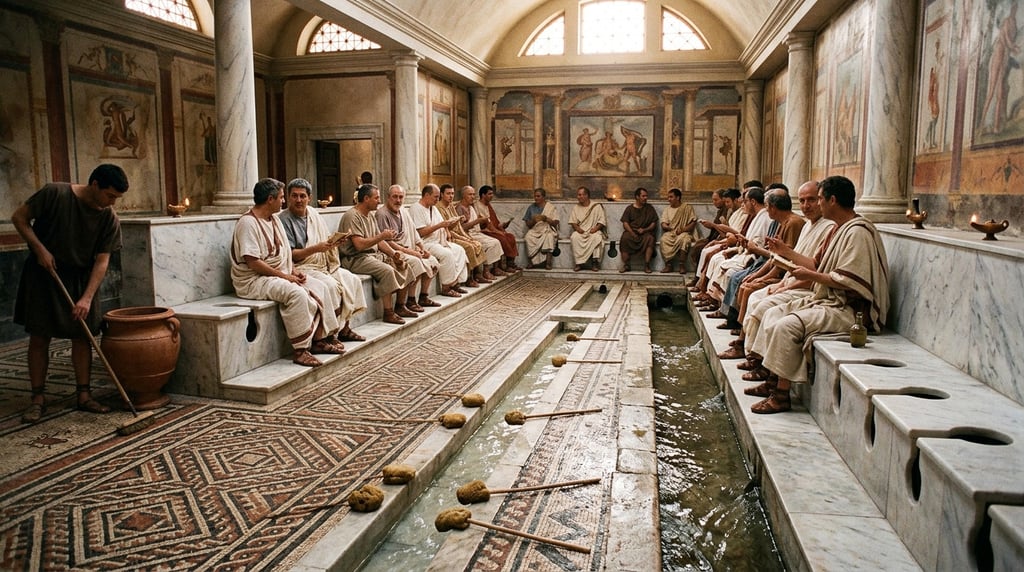
The toilets of Ancient Rome were surprisingly advanced structures for their time, reflecting concerns with public hygiene and engineering. They were generally built with stone, bricks, or concrete, materials that provided durability and resistance. Roman toilets were designed with long benches where multiple users could sit side by side, demonstrating a collective approach to sanitation.
The interior design often included a plumbing system that carried waste into exposed or underground sewers. This engineering allowed waste to be transported away from populated areas, reducing public health risks. The materials used in toilets varied depending on local availability, but elements such as mortar and ceramics were commonly used to create efficient and functional environments.
In urban areas, public toilets were strategically placed in high-traffic locations, such as markets and public squares, varying in size and complexity. Private toilets, which served individual homes, were smaller and often connected to domestic sewage systems. These private facilities were sometimes decorated with mosaics and other decorative elements, reflecting the social status of their owners.
The arrangement of Roman toilets was both functional and social. In many cases, toilets served as spaces for conversation and interaction, showing that in Ancient Rome, sanitation facilities had a purpose that went beyond hygiene. The interaction between citizens in these spaces was part of public life and highlighted the importance of collective health and well-planned urban infrastructure.
The Sewer System in Rome
The sewer system of Ancient Rome was one of the most remarkable aspects of its urban infrastructure, reflecting technological advancement and a concern for public health. The construction of the Roman cloacas, especially the famous Cloaca Maxima, was a crucial milestone in its development. Built around the 6th century BC, the Cloaca Maxima served as one of the city’s main drainage channels, allowing waste and rainwater to be directed into the Tiber River, preventing contamination of inhabited areas.
To ensure the efficient operation of this system, Rome also built an extensive network of aqueducts that transported fresh water from distant sources into the city. These aqueducts used a sophisticated system based on elevation and gravity, allowing water to flow naturally. With a total length of hundreds of kilometers, this network not only supplied drinking water but also played an essential role in maintaining public toilets and Roman baths.
The connection between aqueducts and the sewer system demonstrated sophisticated urban planning. Fresh water was supplied to bathing facilities and toilets, while waste was immediately carried away through drainage channels. This process reduced the risk of diseases that were common in densely populated urban areas. However, the effectiveness of the sewer system also depended on citizens helping to keep the channels clean and free from blockages.
Thus, the design and implementation of Roman sewer systems not only facilitated waste removal but also reflected an important aspect of Roman civilization: the pursuit of public health and hygiene, an achievement that remains impressive even today.
The Functioning of Public Toilets
Public toilets in Ancient Rome represented a fundamental part of the city’s sanitation system, reflecting the complex relationship between hygiene and social life. These facilities were designed to serve a large number of users, who often used them simultaneously, demonstrating the need for an efficient and functional environment.
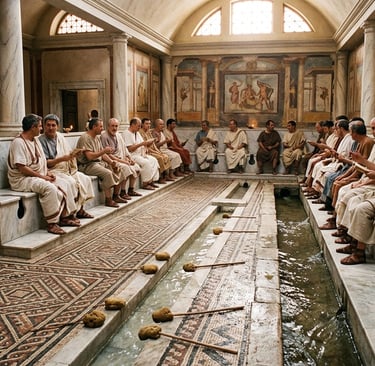
Each toilet was equipped with long stone benches containing openings, allowing several people to sit side by side. This proximity encouraged not only the practical use of the facilities but also social interaction, conversations, and exchanges of ideas between friends and strangers. In Roman society, public toilets became part of daily urban life and represented spaces where people could communicate and interact.
Regarding hygiene, the operation of these toilets was supported by an advanced drainage system. Human waste was carried through underground channels that flowed into rivers, reflecting an early but effective understanding of the need to remove waste from populated areas and protect public health.
Although cleanliness levels varied depending on location and maintenance, many public toilets were regularly cleaned and managed, demonstrating the Roman commitment to maintaining sanitary conditions in public spaces.
Culturally, the use of public toilets went beyond their practical purpose. These places became environments where citizens discussed politics, business, and everyday matters. Additionally, cleaning tools and water systems were often available to users, showing how sanitation was integrated into Roman social customs.
Therefore, Roman public toilets were not simply places for personal hygiene but also important social spaces that reflected the organization and complexity of Roman urban life.
Innovations and Technology in Roman Sanitation
The development of sanitation in Ancient Rome represents one of the greatest achievements of Roman engineering. Their technological advances were essential for improving public health and maintaining the quality of life in one of the largest cities of the ancient world.
One of the most important innovations was the drainage system, which allowed efficient control of rainwater and wastewater. The Romans created an extensive network of underground sewers, using stone, clay pipes, and concrete structures to transport water and waste effectively. This infrastructure helped prevent flooding and reduced the contamination of drinking water sources.
The aqueducts were among the most impressive examples of Roman engineering. These massive structures provided a constant supply of running water to the city, transporting it from distant springs and rivers. This water was essential not only for drinking and public baths but also for maintaining toilets and sanitation facilities.
The continuous flow of water through Roman toilets helped remove waste and keep these areas cleaner. This system represented a significant improvement compared to many other ancient civilizations, where waste disposal was often much less organized.
The Romans also developed specialized maintenance systems to preserve their sanitation infrastructure. Workers were responsible for cleaning and repairing sewers, ensuring that these essential structures continued to function properly.
The combination of technological innovation, engineering expertise, and careful management created a sanitation system that influenced urban development for centuries. Roman achievements in water management and waste disposal remain an important example of how infrastructure can transform society.
The Impact of Sanitation on Public Health
The sanitation system of Ancient Rome had a major impact on public health and the daily lives of its citizens. Although Roman engineering achieved remarkable advances, sanitation challenges still existed, especially due to the large population density and limitations in medical knowledge.
Poor waste disposal, contaminated water sources, and inadequate maintenance in some areas created conditions where diseases could spread. Urban environments with crowded housing and limited hygiene practices increased the risk of infections and epidemics.
However, Roman innovations in sanitation helped reduce many of these problems. The construction of aqueducts provided access to cleaner water, while sewer systems helped remove waste from populated areas. Public toilets and baths also contributed to better hygiene practices among citizens.
These improvements represented a major step forward in urban health management. The Romans understood that a clean environment was essential for maintaining a strong and prosperous society.
The connection between sanitation and public health became increasingly clear. Efficient waste removal and access to clean water helped improve living conditions and demonstrated the importance of infrastructure in preventing disease.
The Roman experience shows that sanitation is not only a technical issue but also a fundamental part of building healthy and sustainable communities.
The Legacy of Roman Sanitation
The legacy of Roman sanitation remains one of the most important contributions of Ancient Rome to modern urban development. Their innovative approaches to water management, drainage, and waste removal influenced future generations and helped shape the way cities are organized today.
One of the greatest achievements of Roman sanitation was the creation of advanced aqueducts and sewer networks. These systems demonstrated an understanding of how water supply and waste management were essential for maintaining public health and supporting large urban populations.
The design of Roman toilets and drainage systems also influenced modern sanitation concepts. Principles such as separating clean water from wastewater, creating efficient drainage channels, and using durable construction materials continue to be important in contemporary cities.
The famous Cloaca Maxima, one of the oldest sewer systems in the world, remains a symbol of Roman engineering and continues to demonstrate the importance of long-lasting infrastructure.
Beyond technology, the Roman sanitation system changed the relationship between urban planning and public health. It showed that a city’s success depends not only on buildings and monuments but also on invisible systems that protect the population.
Today, modern sanitation networks around the world continue to follow ideas that originated in Ancient Rome. Their achievements remind us that clean water, proper waste management, and public hygiene are essential foundations of civilization.
The story of Roman sanitation is therefore more than a historical curiosity; it is a lesson about innovation, organization, and the importance of creating healthier societies.


contato@pontoschavedahistoria.com.br
© 2026. All rights reserved.